



Как повысить эффективность контроля с помощью координатно-измерительных машин (КИМ) в серийном производстве
2026-05-17 23:16Как повысить эффективность контроля с помощью координатно-измерительных машин (КИМ) в серийном производстве
В серийном производстве эффективность контроля с помощью координатно-измерительной машины (КИМ) напрямую влияет на скорость отгрузки, контроль качества, затраты на доработку и принятие производственных решений. Координатно-измерительная машина может обеспечить точные данные о размерах, но если процесс контроля медленный, нестабильный или чрезмерно зависит от операторов, он может стать узким местом в производстве. Для повышения эффективности контроля с помощью КИМ производителям следует оптимизировать конструкцию приспособлений, конфигурацию измерительных щупов, программы измерений, программное обеспечение для формирования отчетов, рабочий процесс операторов, подготовку деталей и управление данными. В этом руководстве объясняется, как создать более быстрый и воспроизводимый процесс контроля с помощью КИМ для серийного производства.
Быстрый ответ
Для повышения эффективности контроля с помощью координатно-измерительных машин (КИМ) в серийном производстве производителям следует использовать повторяемые приспособления, стандартизированные программы измерения на станках с ЧПУ, оптимизированные траектории движения щупа, подходящие конфигурации щупа и контактной площадки, автоматизированные шаблоны отчетов, четкую оценку соответствия/несоответствия требованиям, стандартные операционные процедуры для операторов, процедуры подготовки деталей и вывод данных для управления процессом. Цель состоит в сокращении времени настройки, уменьшении вариативности работы операторов, сокращении количества повторных измерений и ручной работы по составлению отчетов.
1. Выявите, где происходит потеря времени при проведении контроля с помощью координатно-измерительной машины (КИМ).
Прежде чем повышать эффективность контроля с помощью координатно-измерительных машин (КИМ), производителям следует сначала определить, где именно происходит потеря времени. На многих заводах сама КИМ является не единственным узким местом. Время может быть потрачено впустую на загрузку деталей, настройку приспособлений, проверку измерительных щупов, выбор программы, установку базовых точек, повторные измерения, составление отчетов или обмен информацией между отделами качества и производства.
Серийное производство требует стабильного и воспроизводимого контроля качества. Если операторам приходится вручную корректировать каждую деталь, воссоздавать траектории измерений, редактировать отчеты или перепроверять неопределенные результаты, процесс контроля замедляется. Эти небольшие задержки быстро накапливаются, когда необходимо проверить сотни или тысячи деталей за определенный период времени.
Хороший план по улучшению должен учитывать весь процесс контроля качества, а не только скорость работы оборудования. Наилучшие результаты обычно достигаются за счет сочетания повторяемости оснастки, оптимизированного программного обеспечения, стандартных операционных процедур и более быстрой отчетности.
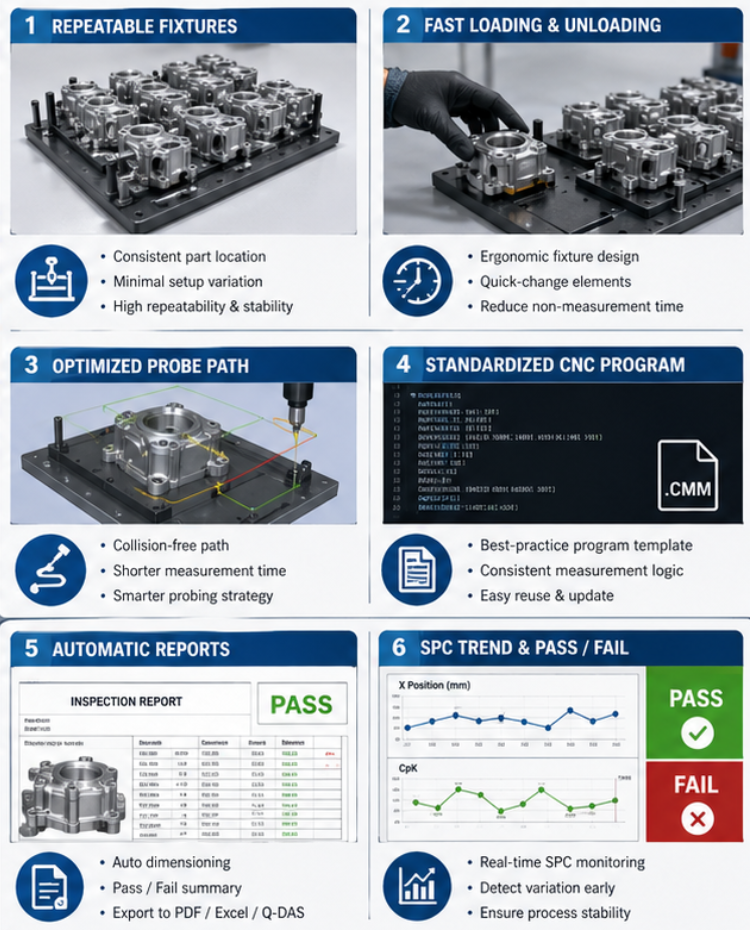
2. Используйте повторяющиеся приспособления для сокращения времени настройки.
Конструкция зажимного приспособления является одним из важнейших факторов при серийном контроле с помощью координатно-измерительных машин (КИМ). Если деталь можно быстро и точно позиционировать, оператор тратит меньше времени на настройку, а программа измерений работает более стабильно. Некачественные зажимные приспособления приводят к нестабильному позиционированию, необходимости повторной работы по выравниванию и повышенному риску отклонения результатов измерений.
Приспособление для серийного контроля должно поддерживать правильные базовые точки, предотвращать деформацию деталей, обеспечивать безопасный доступ для измерительного щупа и упрощать загрузку и выгрузку. Для деталей, выпускаемых серийно, специализированное приспособление часто оказывается более эффективным, чем универсальное, поскольку оно снижает необходимость в субъективной оценке со стороны оператора и корректировке настроек.
| Улучшение оборудования | Как это повышает эффективность | Проверка покупателя / завода |
|---|---|---|
| Повторяемые точки определения местоположения | Уменьшает погрешности выравнивания и время настройки. | Проверьте базовую структуру и направление нагрузки на деталь. |
| Конструкция с быстрым зажимом | Ускоряет погрузку и разгрузку. | Избегайте деформации из-за чрезмерной силы зажима. |
| Планирование очистки зонда | Предотвращает столкновения и ненужные изменения траектории движения. | Подтвердите доступ ко всем критически важным функциям. |
| Многокомпонентное крепление | Позволяет проверять несколько деталей за один цикл. | Полезно, когда размер детали и объем партии соответствуют требованиям. |
| Стандартизация оборудования | Сокращает количество ошибок при обучении и настройке операторов. | Создайте инструкции по использованию приспособлений и разметку нагрузки. |
3. Оптимизация конфигурации зонда и стилуса.
Выбор щупа и контактной площадки может существенно повлиять на скорость контроля. Если контактная площадка слишком длинная, нестабильная или плохо соответствует элементам детали, станку может потребоваться снижение скорости измерения или повторные проверки. Если щуп не может легко достигать элементов, операторам, возможно, придется часто менять конфигурацию контактной площадки, что увеличивает время простоя.
Для серийного производства идеальная конфигурация датчика должна охватывать как можно больше необходимых элементов без частых ручных перенастроек. Автоматическая смена датчика может быть полезна, когда для деталей требуются разные углы наклона или различные типы щупов. Сканирующие датчики могут повысить эффективность при обработке профилей и поверхностей, в то время как датчики с сенсорным триггером могут быть более практичными для стандартных отверстий, плоскостей и дискретных элементов.
Контрольный список эффективности зондирования
Можно ли измерить большинство важнейших параметров с помощью одной измерительной установки?
Сведены ли к минимуму замены стилуса во время проверки партий продукции?
Достаточно ли короткий и устойчивый стилус для получения воспроизводимых результатов?
Для уменьшения необходимости перепозиционирования необходимы угловые или звездообразные стилусы?
Улучшит ли автоматическая смена датчиков рабочий процесс контроля?
Полезна ли технология сканирования для анализа профилей, поверхностей или сбора больших объемов данных?
4. Стандартизация программ измерения на станках с ЧПУ.
Стандартизированные программы для измерений на станках с ЧПУ необходимы для эффективного контроля качества продукции в пакетном режиме с помощью координатно-измерительных машин (КИМ). После создания надежной программы станок может повторять одну и ту же процедуру измерения с меньшим участием оператора. Это повышает стабильность результатов и сокращает время, необходимое для принятия решений вручную.
Программы для измерений должны использовать четкую стратегию базовых значений, безопасные пути перемещения зонда, оптимизированное распределение точек, подходящую скорость измерения и автоматический вывод отчетов. Количество ненужных точек должно быть уменьшено, но критически важные характеристики должны быть измерены с достаточным количеством данных для надежной оценки. Цель состоит не просто в том, чтобы сделать программу быстрее, а в том, чтобы сделать ее быстрой и надежной.
| Оптимизация программы | Преимущество в эффективности |
|---|---|
| Используйте выравнивание по стабильной опорной точке. | Уменьшает необходимость повторной коррекции настроек и вариативность результатов. |
| Оптимизировать порядок прохождения зонда | Сокращает время перемещения оборудования и время цикла. |
| Удалите ненужные точки | Повышает скорость, сохраняя при этом ключевую надежность проверки. |
| Используйте шаблоны программ | Ускоряет программирование новых семейств компонентов. |
| Версии программ управления | Предотвращает использование операторами неправильных или устаревших программ. |
5. Автоматизация создания отчетов и вывода данных.
Ручное редактирование отчетов — один из самых простых способов потерять время при серийном контроле качества. Программное обеспечение КИМ должно автоматически генерировать стандартные отчеты после цикла измерения. Отчеты должны включать идентификатор детали, название программы, измеренные значения, номинальные значения, отклонение, допуск, результат «пройдено/не пройдено», оператора, станок, дату и, при необходимости, ключевые примечания по контролю.
Для серийного производства данные статистического контроля процессов (SPC) могут быть даже более ценными, чем отдельные отчеты. Данные о тенденциях помогают инженерам понять, начинает ли процесс отклоняться от нормы, еще до того, как детали станут некачественными. Это позволяет производственным бригадам на ранних стадиях корректировать оборудование, инструменты или приспособления и сокращать количество брака.
Полезные функции программного обеспечения для пакетной проверки
Автоматическое создание отчетов о проверке
Четкое отображение результатов «пройдено/не пройдено»
Экспорт данных SPC для управления технологическим процессом
Ввод штрихкода или идентификатора детали.
Выбор программы по модели продукта или рабочему заказу
Шаблоны отчетов для клиентов и внутренних групп по обеспечению качества.
Подключение данных к системам управления качеством или производством.
6. Улучшение подготовки деталей и оптимизации рабочего процесса оператора.
Эффективность контроля также зависит от того, что происходит до того, как деталь попадает на координатно-измерительную машину (КИМ). Перед измерением детали должны быть очищены, зачищены от заусенцев, термостабилизированы и подготовлены к обработке. Если операторам приходится очищать детали, искать чертежи, находить нужное приспособление или подтверждать программу контроля во время работы на КИМ, загрузка станка снижается.
Четко выстроенный рабочий процесс для операторов может сократить время ожидания и количество ошибок. Для каждой партии должны быть определены этапы подготовки деталей, инструкции по настройке приспособлений, правила выбора программы, процедуры отчетности и методы обработки нештатных ситуаций. Это позволяет разным операторам следовать одному и тому же процессу в течение смены.
| Этап рабочего процесса | Повышение эффективности |
|---|---|
| Перед проверкой очистите детали. | Уменьшает количество ложных показаний, вызванных стружкой, маслом, пылью или заусенцами. |
| Подготовьте оборудование заранее. | Сокращает время ожидания оборудования. |
| Используйте стандартные инструкции по загрузке. | Повышает повторяемость результатов работы разных операторов. |
| Используйте правильные названия программ. | Предотвращает неправильный выбор программы. |
| Определите порядок обработки ненормальных результатов. | Позволяет избежать повторных ненужных измерений и задержек. |
7. При больших объемах производства следует рассмотреть полуавтоматизацию или полную автоматизацию.
При больших объемах производства полуавтоматизация или полная автоматизация могут повысить эффективность контроля. Это может включать автоматическую замену датчиков, сканирование штрих-кодов, автоматический выбор программы, управление паллетами с приспособлениями, загрузку роботов, подключение конвейеров или интеграцию данных с производственными системами. Автоматизация не всегда необходима, но она может сократить ручную работу и повысить стабильность работы при стабильном режиме применения.
Покупателям следует оценивать автоматизацию, исходя из объема производства, стабильности семейства деталей, времени цикла контроля, стоимости услуг оператора, потребностей в отчетности и окупаемости инвестиций. Если производимая деталь часто меняется, гибкие программы ЧПУ и качественная оснастка могут оказаться более практичными, чем полная автоматизация. Если же одна и та же деталь проверяется многократно в больших количествах, автоматизация может обеспечить значительную долгосрочную выгоду.
Наилучший план автоматизации должен строиться вокруг процесса контроля качества, а не только вокруг аппаратного обеспечения машины.
8. Распространенные ошибки, снижающие эффективность КИМ (координатно-измерительной машины).
Использование нестабильных или медленно загружаемых приспособлений для контроля качества партий продукции.
Измерение слишком большого количества ненужных параметров без улучшения качества принимаемых решений.
Слишком частое изменение конфигурации стилуса в течение одного цикла проверки.
Редактирование отчетов вручную после каждого измерения.
Предоставление различным операторам возможности использовать различные стратегии определения координат.
Использование нечётких названий программ, приводящих к неправильному выбору программы.
Пропуск очистки деталей приводит к повторяющимся ошибкам измерений.
Неиспользование данных статистического контроля процессов для раннего выявления производственных тенденций.
Попытка автоматизации до того, как базовый рабочий процесс с приборами и программами станет стабильным, является неправильной.
Повышение эффективности координатно-измерительных машин часто не сводится к одному крупному изменению. Как правило, это результат множества небольших улучшений процесса, которые делают контроль быстрее, стабильнее и проще воспроизводимым.
Заключение
Повышение эффективности контроля с помощью координатно-измерительных машин (КИМ) в серийном производстве требует комплексного подхода к рабочему процессу. Производителям следует сократить время настройки за счет использования повторяемых приспособлений, оптимизировать конфигурации щупов и контактных щупов, стандартизировать программы измерения на станках с ЧПУ, автоматизировать создание отчетов, подготавливать детали перед контролем, обучать операторов и использовать полученные данные для обратной связи с производством. При больших объемах производства полуавтоматизация или полная автоматизация могут еще больше повысить производительность. Хорошо разработанный процесс контроля с помощью КИМ может уменьшить узкие места, улучшить повторяемость, ускорить принятие решений по качеству и усилить контроль качества продукции.
Необходимо повысить эффективность контроля с помощью координатно-измерительных машин (КИМ)?
Свяжитесь с нами, чтобы обсудить ваши требования к контролю качества партий деталей, допуски, настройку приспособлений, конфигурацию измерительных щупов, программное обеспечение для измерений, рабочий процесс составления отчетов и план автоматизации. Мы поможем вам оценить подходящее решение на основе координатно-измерительной машины (КИМ) для более быстрого и воспроизводимого контроля качества продукции.